Published October 18, 2025 · Updated October 7, 2026 · 5 min read
How to Budget a Home Remodel in Pennsylvania: Real Ranges, the 15 Percent Rule, and the Costs Nobody Puts on the First Estimate
By the Amazing Builders crew, Myerstown, PA. Prices quoted are typical ranges for our region, not a quote for your house. Ask for one.
The most common way a remodel goes over budget is not a bad contractor or a surprise behind the wall. It is a budget that was never a budget: a number someone hoped for, with no contingency, no soft costs and no decision about what mattered most. Here is how to build one that survives contact with an old Pennsylvania house.
Typical regional ranges, not a quote.
Start with the ranges, not the hope
| Project | Typical range in our area | Typical return at resale |
|---|---|---|
| Kitchen remodel | $25,000 to $60,000 | 70 to 80 percent |
| Bathroom renovation | $12,000 to $30,000 | 65 to 75 percent |
| Basement finishing | $20,000 to $45,000 | 60 to 70 percent |
| Exterior remodel, siding, windows, doors | $10,000 to $40,000 | About 60 percent |
Those are mid-range projects. A kitchen refresh or a basement without a bathroom can come in under the range; a full gut with layout changes goes over it. The detailed line items are in our guides for kitchens, bathrooms, basements, windows and doors and siding. The national Cost vs. Value report is the standard reference for returns, and Central Pennsylvania tracks it closely.
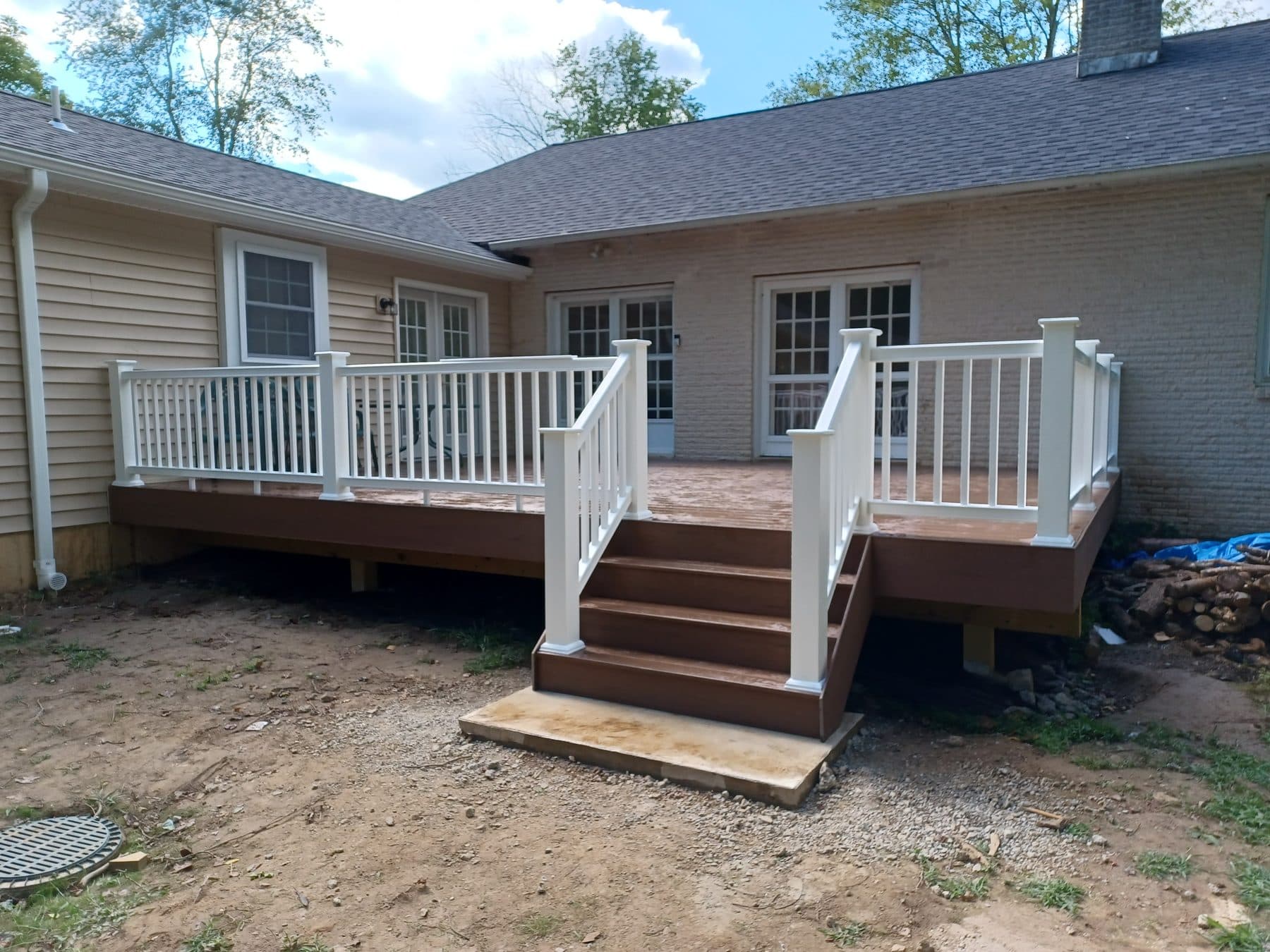
 South Philadelphia, PAApr 2025before
Decide what the project is for
A budget without a priority is a list of wishes. Before any numbers, answer one question: what has to be true when this is done?
- "We need a second bathroom before the kids are teenagers." Then the bathroom is the project and the kitchen is next year.
- "We are selling in three years." Then spend on what buyers see: kitchen surfaces, the main bath, paint, the front of the house. Skip the custom built-ins.
- "We are staying for twenty years." Then spend behind the walls: wiring, plumbing, windows, a curbless shower. The finishes can be changed later; the plumbing cannot.
Write the one sentence down. Every later decision gets measured against it.
The 15 percent rule
Set aside 10 to 15 percent of the contract price for things nobody can see at the estimate. In a house built after 1990, 10 percent is usually enough. In a Lebanon County farmhouse or a borough rowhome built before 1950, plan on 15, because behind the walls there will be one of these:
- Galvanized or cast iron pipes that have to be replaced while the wall is open.
- Knob-and-tube or ungrounded wiring.
- A joist that was cut for a drain fifty years ago.
- Plaster that comes off in sheets.
- A slab that is damp.
The contingency is not for upgrades. It is for the house. If it is not spent, it is still yours.
The soft costs
These are real money and they are rarely on the first estimate:
- Permits. $100 to $500 for a deck; several hundred for a kitchen or bath with trades; more for structural work.
- Design. Drawings for a layout change, or a kitchen designer's fee.
- Temporary living. A full gut means no kitchen for a month: eating out, a rented room, a storage unit for furniture.
- Appliances and fixtures you buy yourself. Easy to forget because they are not on the contractor's number.
- The things next to the project. New kitchen floors run into the dining room. A new bathroom door means the hallway gets painted.
- Landscaping after an exterior job. Decks and siding leave the ground torn up.
Add them to the budget as lines, even if they are guesses.
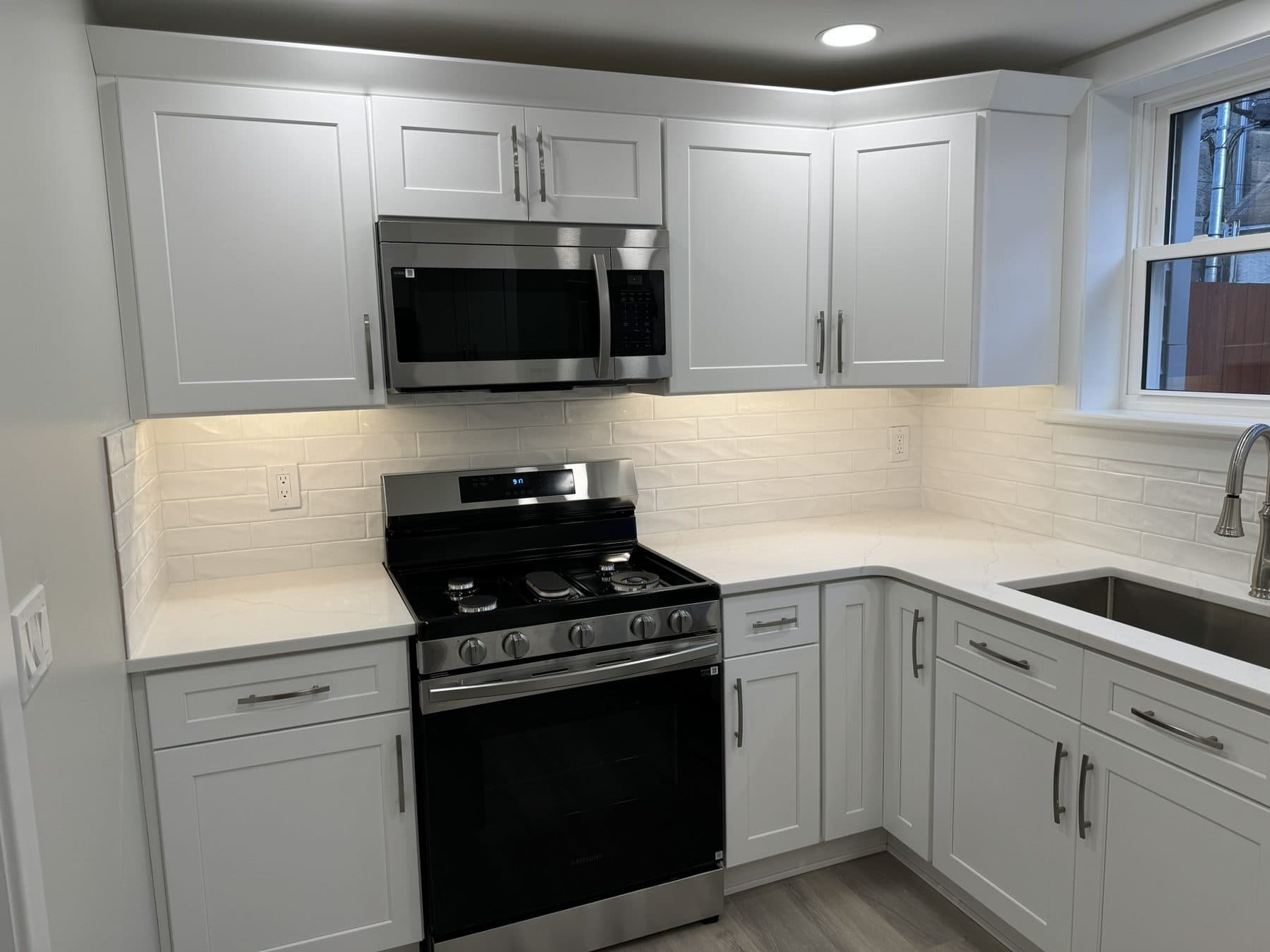 South Philadelphia, PAAug 2025after
Where the money should go first
In order, for almost any house:
- Water and structure. Leaks, rot, a wet basement, a sagging floor. Nothing on top of these lasts.
- Systems. Wiring, plumbing, heat, windows. Boring and permanent.
- Layout. The wall that should come out, the door that should move.
- Surfaces. Cabinets, tile, counters, floors.
- Finishes. Paint, hardware, lighting, trim.
Most people budget from the bottom of this list up. Build from the top down and the finishes will still look good in ten years because the house under them is right.
Where to save, and where not to
Save on: cabinet style (semi-custom in a stock door, not custom), countertop pattern (plain quartz, not exotic), tile pattern (straight layout), the number of paint colors, light fixtures, hardware. All of these can be upgraded later for the price of the item.
Do not save on: waterproofing, the electrician, the plumber, the subfloor, windows on the weather side, the shower valve, and the labor of whoever is setting your tile. None of those can be fixed later without tearing out what is on top of them.
Phasing a project you cannot afford at once
A whole-house plan done in three phases over three years costs a little more than doing it at once, because setup repeats, but it is far better than doing nothing or doing it with too little money. The rules for phasing:
- Rough in for the future now, while the walls are open. Plumbing lines for a basement bath cost little in year one and a fortune in year three.
- Finish rooms completely rather than everything partly. One finished bathroom beats two half-finished ones.
- Keep the same contractor if the first phase went well. They know what is behind your walls.
We built a long deck in two phases, boards one year and railings the next, and it worked because the frame was checked and the plan was written down the first year.
Paying for it
Cash, a home equity line, a renovation loan or a contractor's financing partner. Whatever the source, the Pennsylvania rule on deposits applies: no more than one-third of the contract price up front, plus special-order materials, with the rest tied to milestones. A contractor who wants half up front is financing their business with your money. The Attorney General publishes the rules.
Frequently asked questions
How much should I budget for a remodel in Pennsylvania? A mid-range kitchen $25,000 to $60,000, a bathroom $12,000 to $30,000, a basement $20,000 to $45,000, plus 10 to 15 percent contingency and the soft costs above.
What is a reasonable contingency? 10 percent for a newer house, 15 percent for anything built before 1950.
Should I tell the contractor my budget? Yes. We can design to a number. We cannot design to a secret, and the result is three rounds of estimates instead of one.
Is it cheaper to do everything at once? Slightly, because setup and dust protection happen once. It is only cheaper if you can actually afford it; a phased plan beats a project that stalls halfway.
Build the budget with us
Send the one sentence about what the project is for and the range you are working with. We will come out, tell you what we see behind the walls, and send an itemized estimate you can build a real budget around.