
Pennsylvania · February 2023
Deck resurfacing in February: new composite boards and stairs, original railings kept
A long deck along the side of a house got new brown composite boards and rebuilt stairs on its existing frame, with the original wood railings left in place for a later phase. Done in winter, between the owner's two budget years.
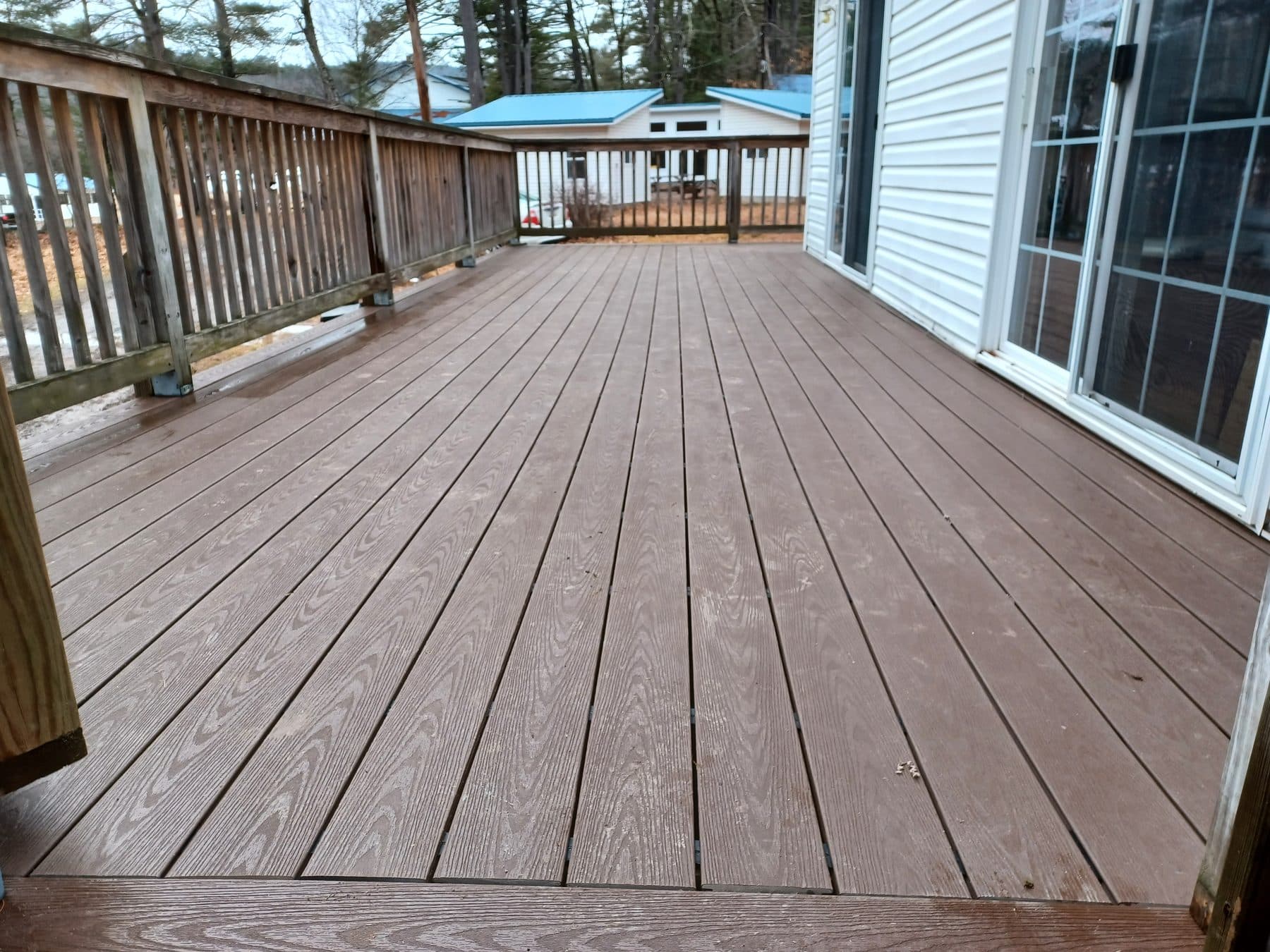 PennsylvaniaFeb 2023after
- Old deck boards and stair treads removed
- Frame inspected and repaired
- Composite boards laid on the existing joists
- Stairs rebuilt with composite treads
- Original railings kept for a later phase
A deck in two phases
Not every deck job has to be done at once. This long deck ran along the side of the house and down a stair to the driveway. The boards were finished; the frame was fine; the railings were old but safe. The owner's budget covered the boards this year and the railings next year, so that is how we did it.
What we did
- Boards off, frame checked. The old wood decking and stair treads came off. We probed every joist and checked the ledger and posts. The frame passed.
- New composite boards. Brown composite decking laid across the existing joists with hidden fasteners, running the length of the deck.
- Stairs rebuilt. New composite treads on the stair stringers, with the original railings on each side.
- Railings left alone. The original wood railings stayed. They are sound, and replacing them later does not disturb the new boards.
Working in winter
The photos are from February. Decks can be resurfaced in cold weather with two adjustments:
- Gapping. Composite boards expand in heat and contract in cold. Boards installed at 30 degrees are at their shortest, so they get a tighter gap than boards installed in July, or the summer gap will be too wide. The manufacturer publishes a chart; we follow it.
- Fasteners. Hidden clips and screws go in fine in the cold. What does not work in winter is stain and sealer, which is another reason composite suits a winter job: there is nothing to apply.
Why keep the old railings
A railing replacement is a separate job with its own cost. If the existing railing is structurally sound and meets code height, there is no reason it has to go the same day the boards do. We told the owner what to budget for the railings and the deck is usable in the meantime.
Questions we get about resurfacing
How do I know if my frame is good enough? Push an awl into the joists where the boards were. If it sinks in more than a quarter inch, that joist is done. Check the ledger bolts and the post bottoms the same way. We do this for free at the walkthrough.
Can you do it in winter? Yes, as long as the ground is not frozen hard where posts need work. Boards and fasteners do not care about the cold; stain and sealer do, and composite needs neither.
How long does it last? Composite boards carry 25-year warranties from most makers. The frame under them is the limit, which is why we only resurface frames that will outlast the boards.
Expert notes
- Composite boards over an old frame need the frame to be flat. We shimmed two joists that had sagged so the new surface runs true.
- Stair treads take more abuse than the deck surface. Composite stair treads with a nosing board look finished and do not splinter.
- When the railings are replaced, the posts can be sleeved or set beside the old ones without lifting a board.
*The town of this project will be added once we confirm it with the homeowner.*
Finished
The result
 PennsylvaniaFeb 2023after
 PennsylvaniaFeb 2023after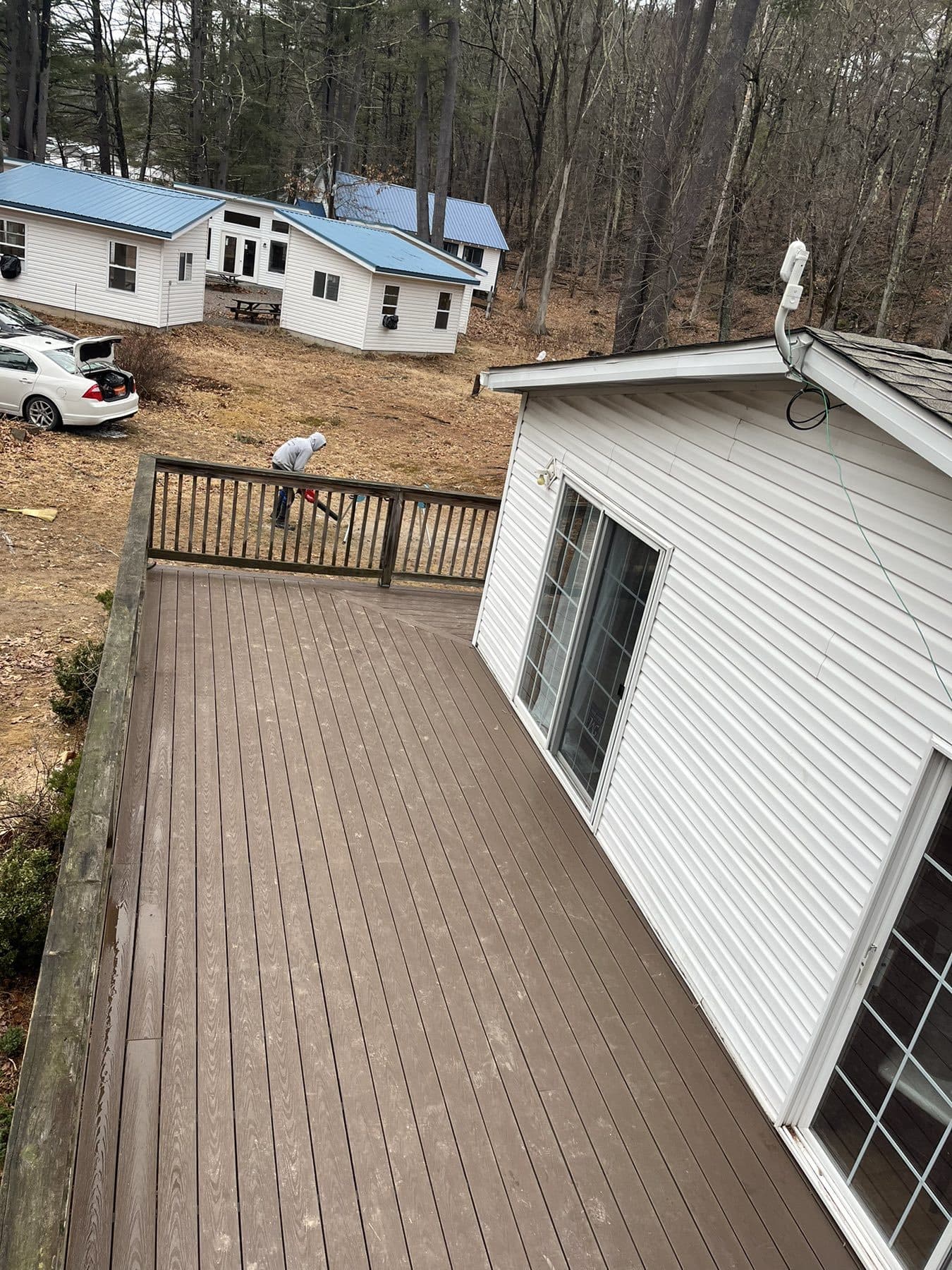
Related services
Free estimate
Have a house like this one?
Send a few lines or call. We will set a time to walk through the house and you will have a written, itemized estimate a few days later.
Monday to Friday, 7:00 am to 5:00 pm