Published October 18, 2025 · Updated October 7, 2026 · 6 min read
Custom Carpentry in Lebanon County, PA: Built-Ins, Trim, Doors and Feature Walls, With Costs and Where They Pay Back
By the Amazing Builders crew, Myerstown, PA. Prices quoted are typical ranges for our region, not a quote for your house. Ask for one.
The difference between a house that feels finished and one that feels like a box is almost always carpentry: the trim around the windows, the built-in beside the fireplace, the railing you touch every day. It is also the part of a remodel that is hardest to buy off a shelf, because it has to fit your walls, which in Lebanon County are rarely square and never standard.
Here is what custom carpentry covers, what it costs in our area, and which pieces pay back when you sell. Typical regional ranges, not a quote.
What custom carpentry costs
| Project | Typical cost | Return at resale |
|---|---|---|
| Custom shelving, one wall | $1,500 to $4,000 | 70 to 80 percent |
| Window seat with storage | $1,200 to $3,000 | 65 to 75 percent |
| Crown molding, one room | $900 to $2,500 | 60 to 70 percent |
| Full-wall built-ins, fireplace or media wall | $3,000 to $7,000 | 80 percent and more |
| Board-and-batten or shiplap feature wall | $800 to $2,500 | Mostly in how the room shows |
| Interior door, prehung, installed and cased | $400 to $900 per door | Mostly in daily use |
| Railing replacement, oak and iron, straight run | $1,500 to $4,000 | High; buyers notice stairs |
Material matters: paint-grade poplar and MDF cost less than stain-grade oak or maple, and both look right when they are finished well.
 PennsylvaniaAug 2023after
Built-ins: furniture that fits the wall
A built-in is a cabinet or shelf unit built to the room: floor to ceiling, wall to wall, around a window, beside a chimney. It uses the awkward space that furniture cannot, and it makes a room look designed instead of furnished.
The ones we build most:
- Fireplace flanking shelves. Two cabinets with shelves above, one on each side of a chimney breast. The classic, and the one with the best resale return.
- Media walls. A low cabinet for the equipment, shelves or a panel above for the television, wiring hidden inside.
- Window seats. A bench under a window with a lift-up lid or drawers. In old Lebanon County houses with deep window bays, a window seat is often the only thing that makes the bay useful.
- Mudroom lockers. A bench, cubbies and hooks by the back door. A small project that changes how a family comes into the house.
- Office walls. Desk, shelves and file drawers along one wall of a spare room.
A built-in is designed on paper first, with the owner, down to the shelf spacing. Then it is built in the shop or in place, scribed to the walls, and painted or finished with the same care as cabinetry.
Trim and molding: the frame around every room
Trim is the carpentry you see most and think about least. Baseboard, door and window casing, crown, chair rail, wainscot. In a new house it is often the thinnest, cheapest profile the builder could buy. Replacing it with a taller baseboard and a wider casing is one of the least expensive ways to make a whole house feel more solid.
- Baseboard and casing are priced by the linear foot, installed and painted.
- Crown molding is the one piece most people hire out, because the corner cuts in an old house are never 90 degrees. We cope the inside corners rather than mitering them, which is why they stay tight when the house moves.
- Wainscot and board-and-batten turn a plain wall into a feature for less than most people expect. The board-and-batten wall with a barn door we built was painted a deep charcoal; the shadows of the battens do the work.
 PennsylvaniaAug 2023during
Interior doors and trim
Old houses in Lebanon, Annville and Myerstown have doors that stick, hollow-core doors from a seventies remodel, or no doors where there should be one. Replacing interior doors is carpentry, not just a swap:
- Prehung doors come in their frame and are the right choice when the old jamb is shot or the opening is being reframed.
- Slab doors go into an existing good jamb and cost less.
- Barn doors slide on a track and need wall space beside the opening; they are a look, not a sound barrier.
- Casing around every new door, matched to the rest of the house or upgraded throughout.
- Hardware last: hinges, knobs or levers, stops.
A door and its trim is a half-day job each once the doors are on site. In a whole-house renovation like our South Philadelphia rowhome, every interior door, closet door and casing was new.
Stairs and railings: carpentry you touch every day
A staircase is the most complex carpentry in a house and the most regulated. New treads, a new railing, or a whole new stair with stringers cut to code are all carpentry we do in house; our stairs and railings page and the South Philadelphia staircase show the work. An oak handrail with black iron balusters is the combination we install most, and it works with almost any floor.
Outside: carpentry that has to survive the weather
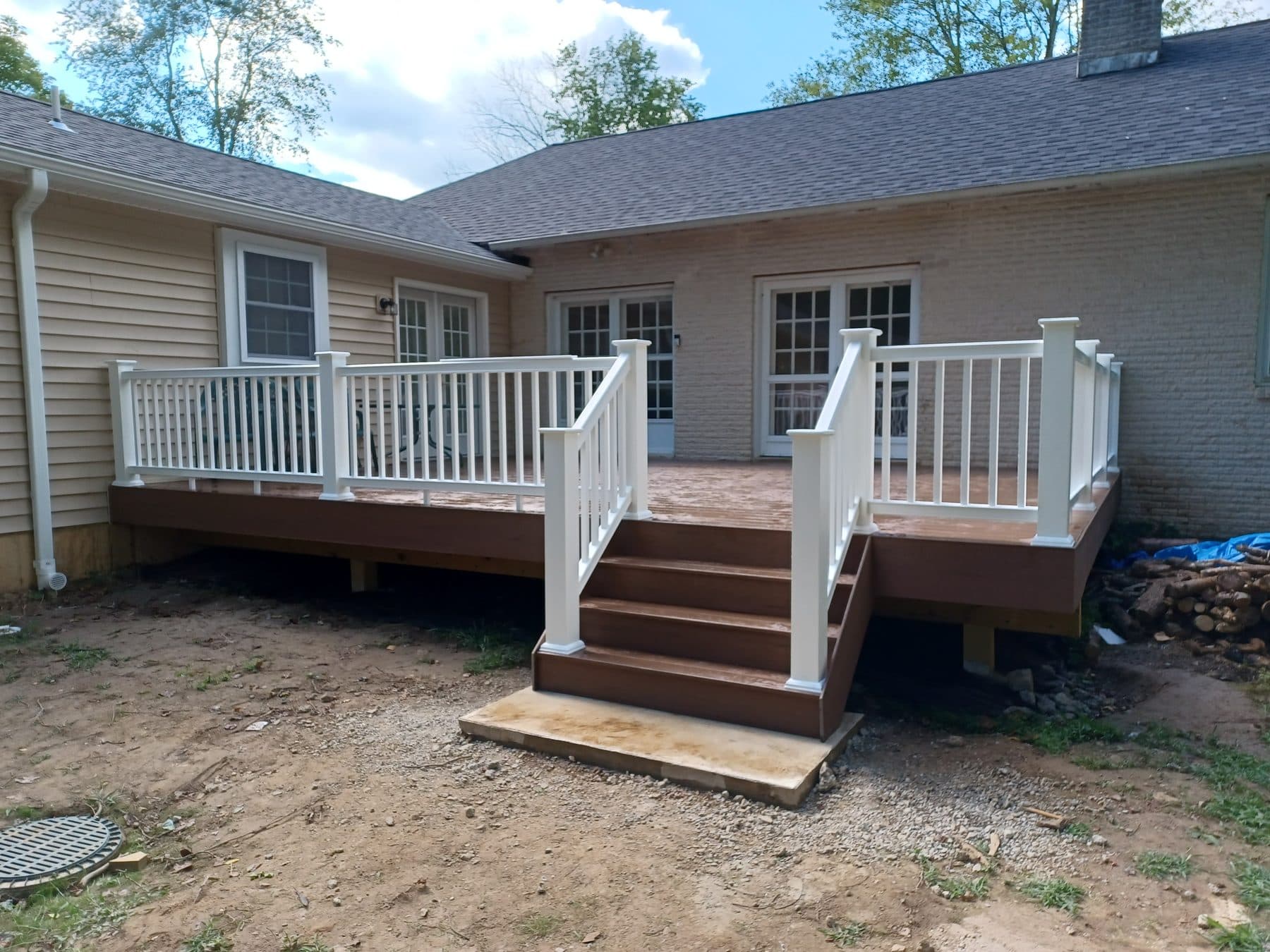
Exterior carpentry is the same trade with different materials: pressure-treated framing, cedar or PVC trim, exterior-grade paint. Fences, privacy screens, porch columns, deck railings and the small enclosures that hide an air conditioner, like the board-and-batten screen we built in Marysville, are all carpentry. The rule outside is simple: prime every cut end, keep wood off the ground, and leave gaps for air.
 Pennsylvaniaafter
How a carpentry project goes
- Walkthrough and a sketch. For built-ins, a drawing with dimensions you approve before anything is cut.
- Material choice: paint grade or stain grade, and the profile for trim.
- Build. Shop-built pieces come in finished; site-built pieces are scribed to the walls and finished in place.
- Paint or finish, with the same prep as any paint job: fill, sand, prime, two coats.
- Hardware and a final walkthrough.
Permits are rarely needed for trim and built-ins. Structural changes, like opening a wall for a built-in or rebuilding a staircase, do need one and we pull it. Pennsylvania requires a written contract for any home improvement job over $500 and registration with the Attorney General for contractors doing more than $5,000 a year.
Frequently asked questions
How much do built-ins cost in Pennsylvania? $1,500 to $4,000 for a wall of custom shelving, $3,000 to $7,000 for full-wall built-ins around a fireplace or media center.
Is crown molding worth it? In a living room, dining room or primary bedroom with eight-foot or taller ceilings, yes. In a low-ceilinged room it can make the ceiling feel lower.
Paint grade or stain grade? Paint grade for anything that will be white or a color. Stain grade only if you want to see wood grain, which costs more in material and finishing.
Can you match my existing trim? Usually. Common historic profiles are still made, and a custom knife can be cut for an exact match on a larger job.
Get a number for your project
Send a photo of the wall or the room and a sentence about what you want it to do, and we will come out with a tape and a sketch. Our services page lists everything else we build.