
Pennsylvania
Weathered wood deck replaced with composite decking
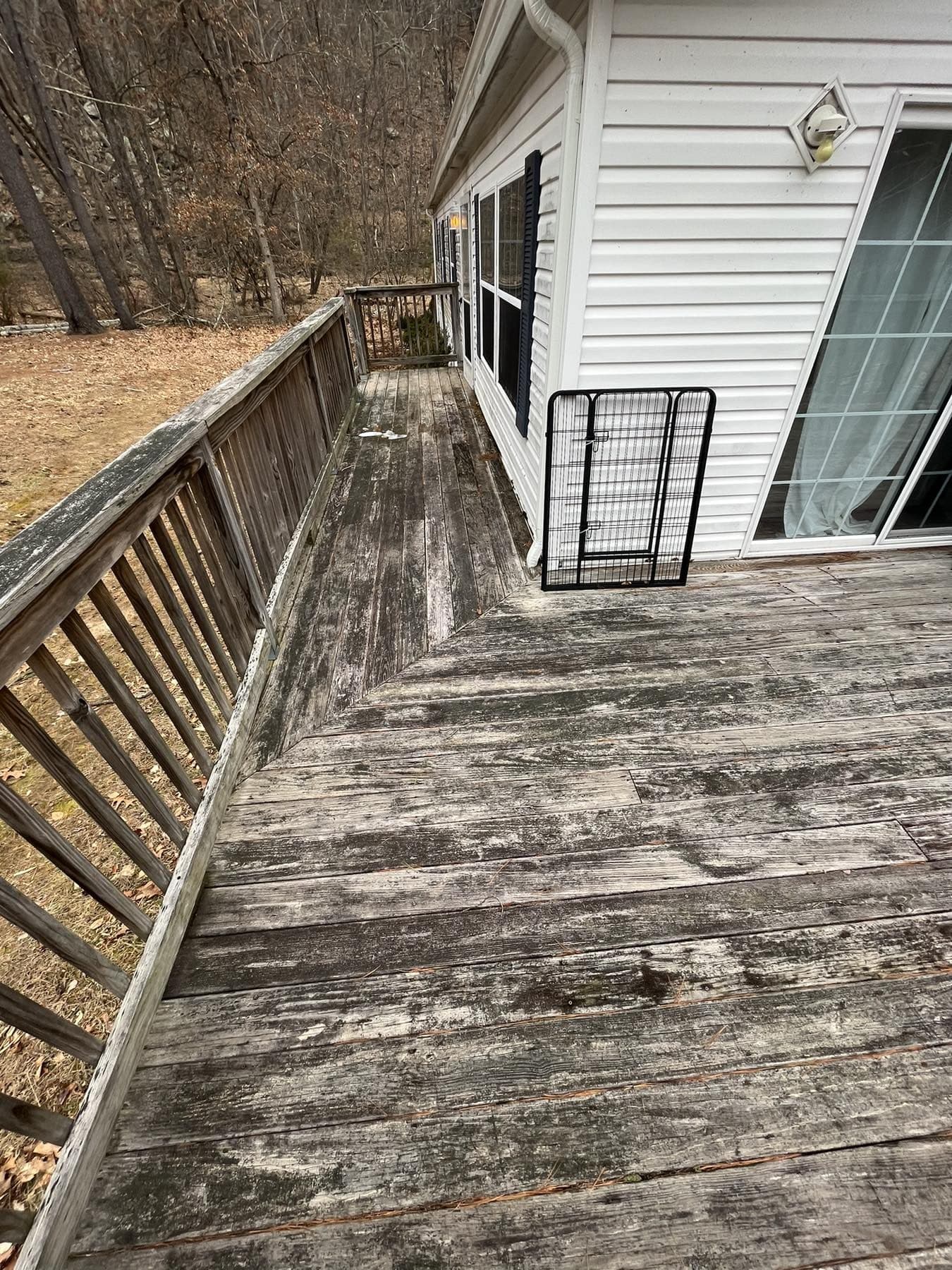
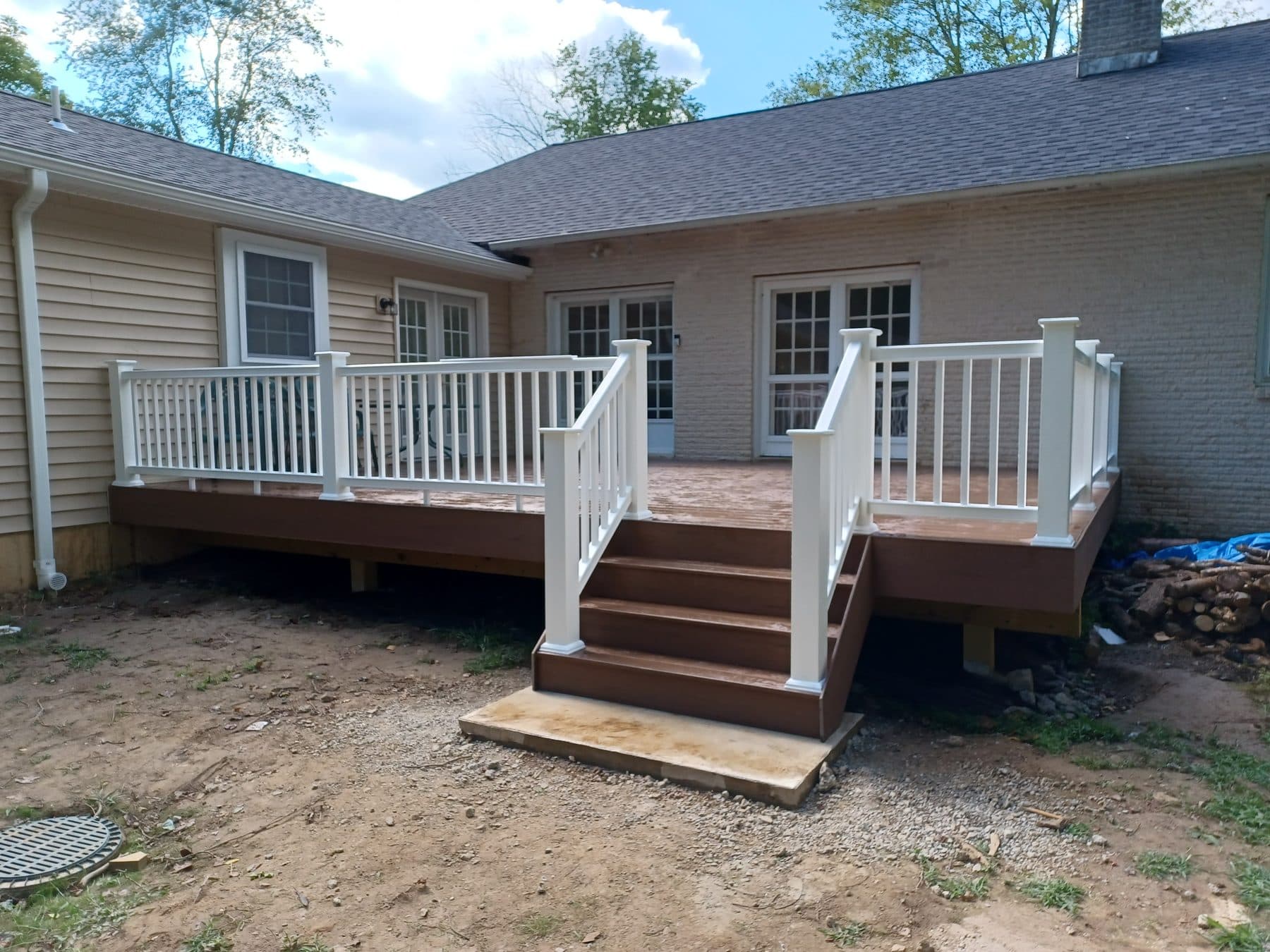
A grey, splintering wood deck on a white-sided home was rebuilt with brown composite boards and new stairs on the same footprint. The frame was inspected and repaired before the first board went down.
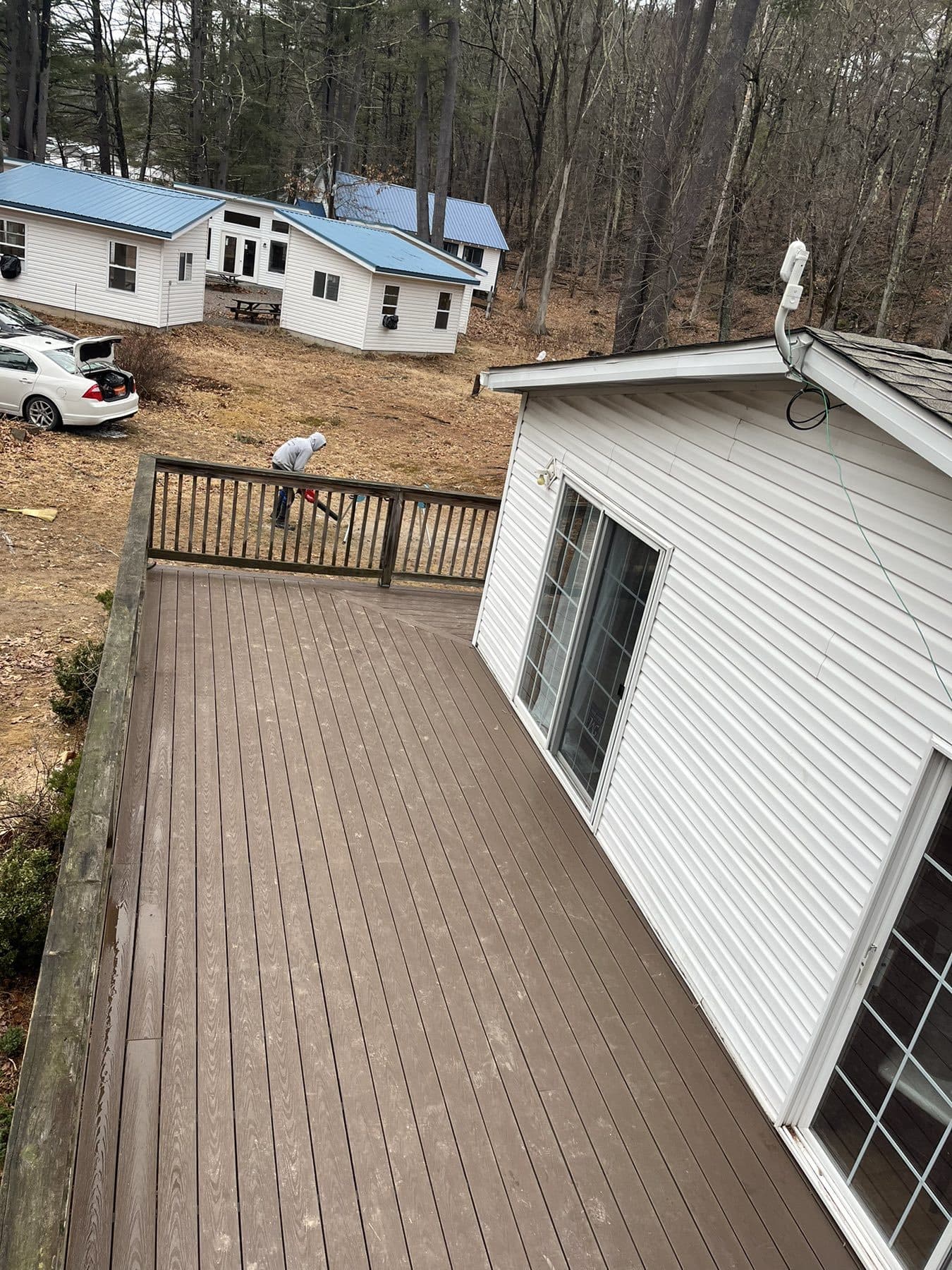 Pennsylvaniaafter
Before and after
- Old decking and stair treads removed
- Frame inspected: ledger, joists, posts and footings
- Repairs to the frame where needed
- Composite decking with hidden fasteners
- New stairs
- Black railings
The starting point
The before photo tells the story. Pressure-treated wood decking that had gone grey and furry, boards cupping and splintering, gaps opening up, and a surface that needed sanding and staining every other year to look acceptable. The deck was still structurally sound where it counted, which is what made this a resurfacing job rather than a tear-out.
Resurface or rebuild
Every deck job starts with the same question. The decking boards are the skin; the frame underneath is the skeleton. If the skeleton is good, you can replace the skin for a fraction of the cost of a new deck. We check four things before we decide:
- The ledger, the board that attaches the deck to the house. It has to be properly bolted and flashed. A rotten or nailed-only ledger is the number one cause of deck collapses, and it is a rebuild, not a resurface.
- The joists. We probe them with an awl, especially the tops where water sat under the old boards.
- The posts and footings. Posts sitting on or in soil rot from the bottom. Footings have to be below frost line, which in Pennsylvania means about 36 inches.
- The connections. Joist hangers, post bases and bolts. Old decks often have a few that were never there.
This frame passed with a few repairs, so the old boards came off and the frame was prepared for composite.
Why composite
- No staining, ever. The brown color in the photos is the color it will be in ten years, give or take some fading.
- No splinters, which matters with kids and bare feet.
- Boards are made with a consistent profile, so the surface is flat and the gaps are even.
The honest downsides: composite costs more per board than treated wood, it gets hotter in full sun, and it is heavier, so the joist spacing has to be right. We confirmed 16-inch joist spacing before ordering boards.
How it was built
- Boards were fastened with hidden clips in the grooved edges, so there are no screw heads on the surface and no place for water to start rot.
- We left the manufacturer's recommended gap between boards for drainage and for the boards to move with temperature.
- Picture-frame boards around the edge give a clean border and cover the cut ends.
- New stairs were built with composite treads on new stringers, and the black railings finish the edges and the stair run.
Maintenance
Wash it once a year with soap and a soft brush. That is the whole list. No sanding, no stain, no sealer.
Thinking about your own deck
If your deck looks like the before photo, do not assume it needs to be torn out. Ask us to look at the frame. A resurfacing with composite on a sound frame is one of the best values in exterior work, and we build new decks too when the frame has reached the end of its life. Our decks and porches page covers both.
*The town and date of this project will be added once we confirm them with the homeowner.*
Finished
The result
 Pennsylvaniaafter
In progress
How it got there
Pennsylvaniabefore
Related services
Free estimate
Have a house like this one?
Send a few lines or call. We will set a time to walk through the house and you will have a written, itemized estimate a few days later.
Monday to Friday, 7:00 am to 5:00 pm